This website is intended for residents of the U.S. interested in achondroplasia or VOXZOGO

Understanding Body Proportionality

Achondroplasia affects body proportionality, which can impact daily functioning. Continue learning below and sign up for a VOXZOGO event led by doctors and caregivers.

Join An Event

Elijah, 20 months old, on VOXZOGO since 12 months old as part of a clinical trial

The impact of VOXZOGO continues to be studied

VOXZOGO is approved under accelerated approval based on an improvement in growth rate after 1 year of treatment. Compared to untreated patients in the study, body proportionality did not worsen at 1 year.

Because achondroplasia is a condition that affects multiple aspects of physical development, additional studies on the impact of VOXZOGO over a longer period of time are ongoing, including its effects on final adult height and body proportionality.

What is body proportionality?

The term “body proportionality” describes how similar in length different parts of the body are in comparison with each other.

Doctors measure body proportionality because it can impact daily functioning, such as reaching for items and self-grooming, and can result in the dependence on devices or caregiver assistance.

Toggle between the 2 examples to see how it is commonly measured.
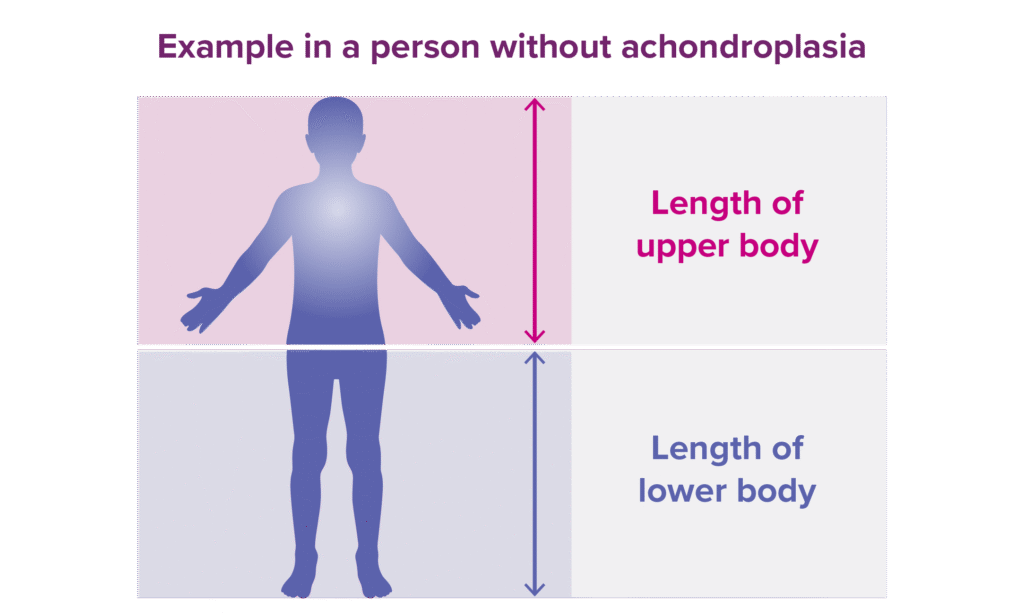
Two examples of how body proportionality is measured.

What is body proportionality?

The term “body proportionality” describes how similar in length different parts of the body are in comparison with each other.

Doctors measure body proportionality because it can impact daily functioning, such as reaching for items and self-grooming, and can result in the dependence on devices or caregiver assistance.

Toggle between the 2 examples to see how it is commonly measured.
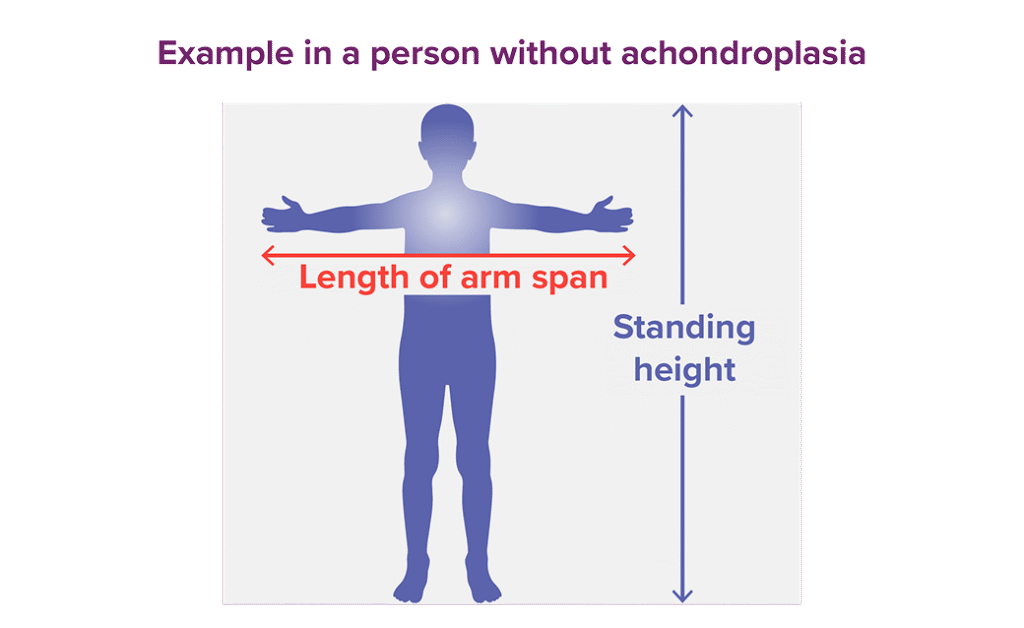
Two examples of how body proportionality is measured.
Upper vs lower body length
Arm span length vs height

Measuring upper vs lower body length ratio

This common measurement is calculated by dividing the length of the upper body with the length of the lower body.

Toggle the buttons to see the difference between a proportionate and disproportionate measurement.
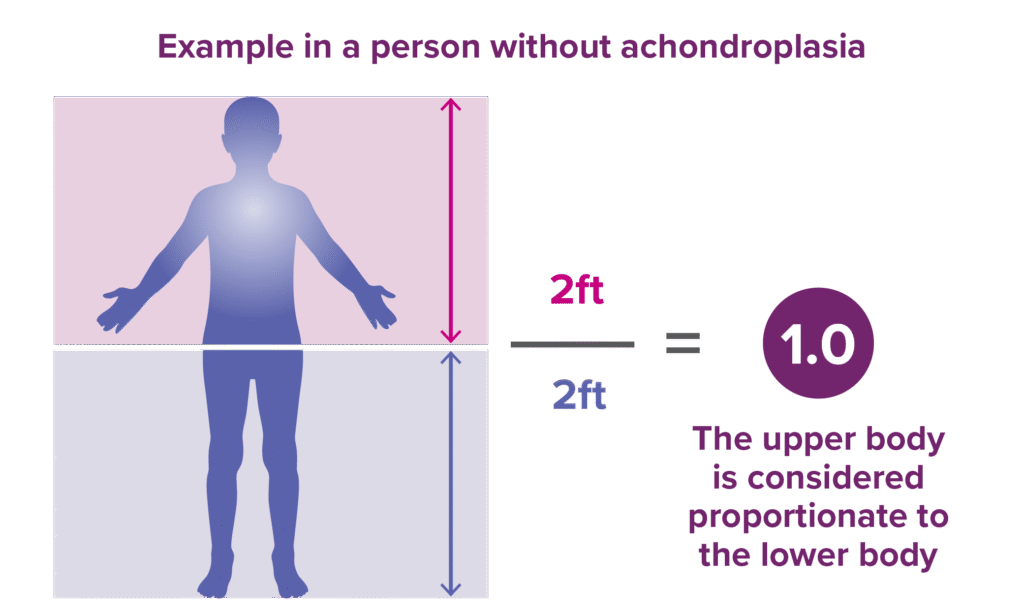
An example of a person with a prortionate upper vs lower body and an example of a person with a disproportionate upper vs lower body.

Measuring upper vs lower body length ratio

This common measurement is calculated by dividing the length of the upper body with the length of the lower body.

Toggle the buttons to see the difference between a proportionate and disproportionate measurement.
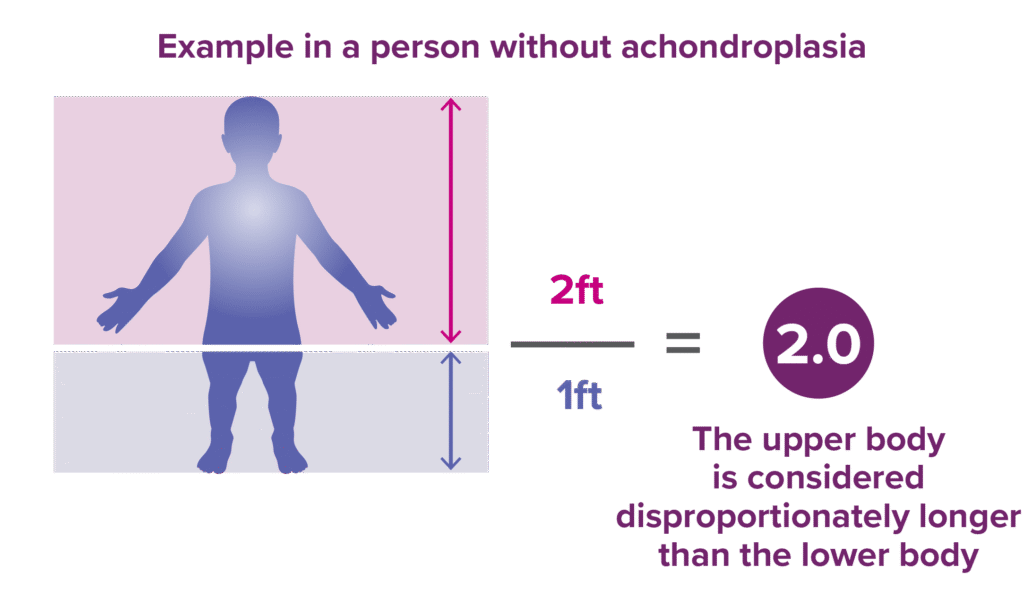
Proportionate ratio
Disproportionate ratio

A ratio of 1.0 means the upper body is proportionate to the lower body.

A ratio higher than 1.0 means the upper body and lower body are considered disproportionate.

Body proportionality in people with achondroplasia

One characteristic feature of achondroplasia is disproportionate growth. This often results in a longer upper body length compared to the lower body.


Notice how the upper body length remains about 1.7x longer than the lower body length in an adult with achondroplasia.
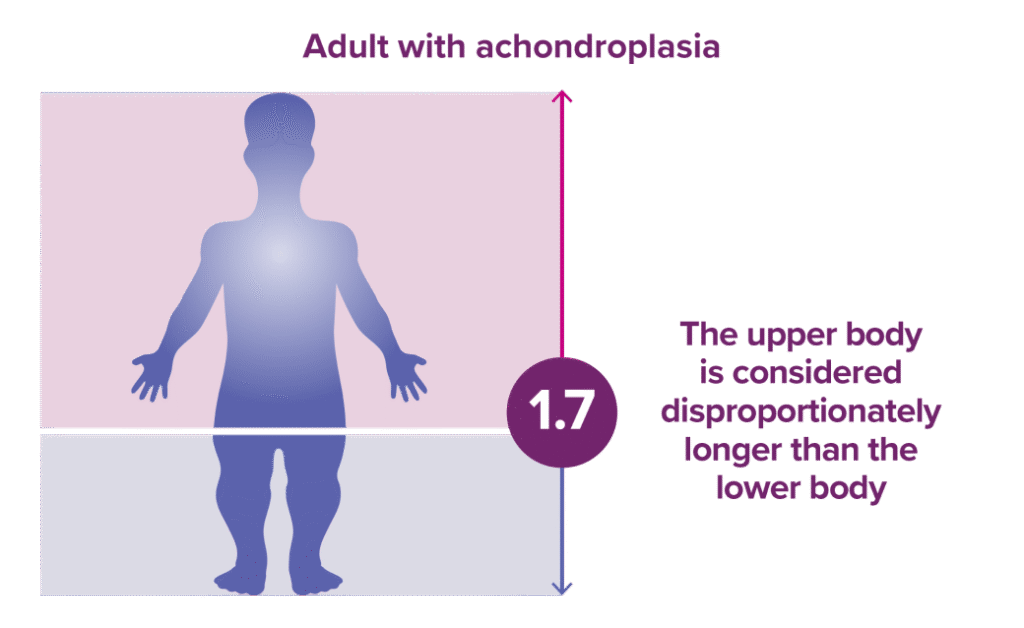
An exmaple of a person with achondroplasia who has a disproportionate upper vs lower body ratio. The ratio is 1.7.

Body proportionality in people with achondroplasia

Achondroplasia affects how body proportions change over time

At birth, all individuals have a greater upper body length compared to their lower body.

As average-stature individuals grow over time, their upper and lower body lengths become proportionate by around 10 years old.

For people with achondroplasia, the upper body remains longer than the lower body, even into adulthood.

Toggle the buttons to gain a better understanding.
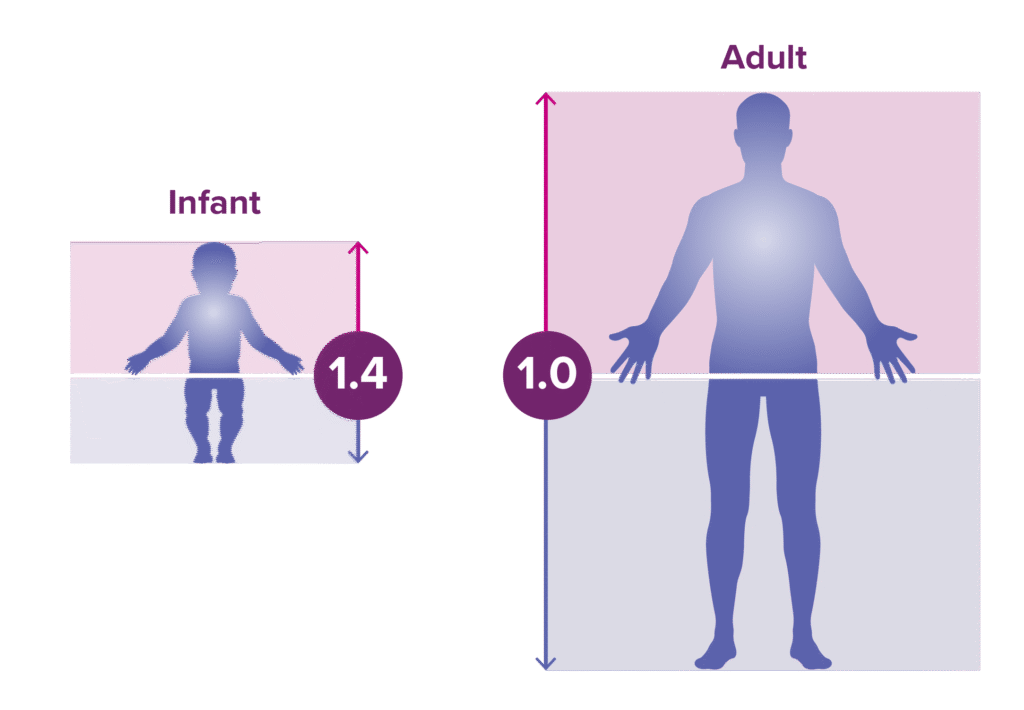
How body proportions change from infancy to adulthood. The first example is an average-stature adult. The second is an adult with achondroplasia.

Achondroplasia affects how body proportions change over time

At birth, all individuals have a greater upper body length compared to their lower body.

As average-stature individuals grow over time, their upper and lower body lengths become proportionate by around 10 years old.

For people with achondroplasia, the upper body remains longer than the lower body, even into adulthood.

Toggle the buttons to gain a better understanding.
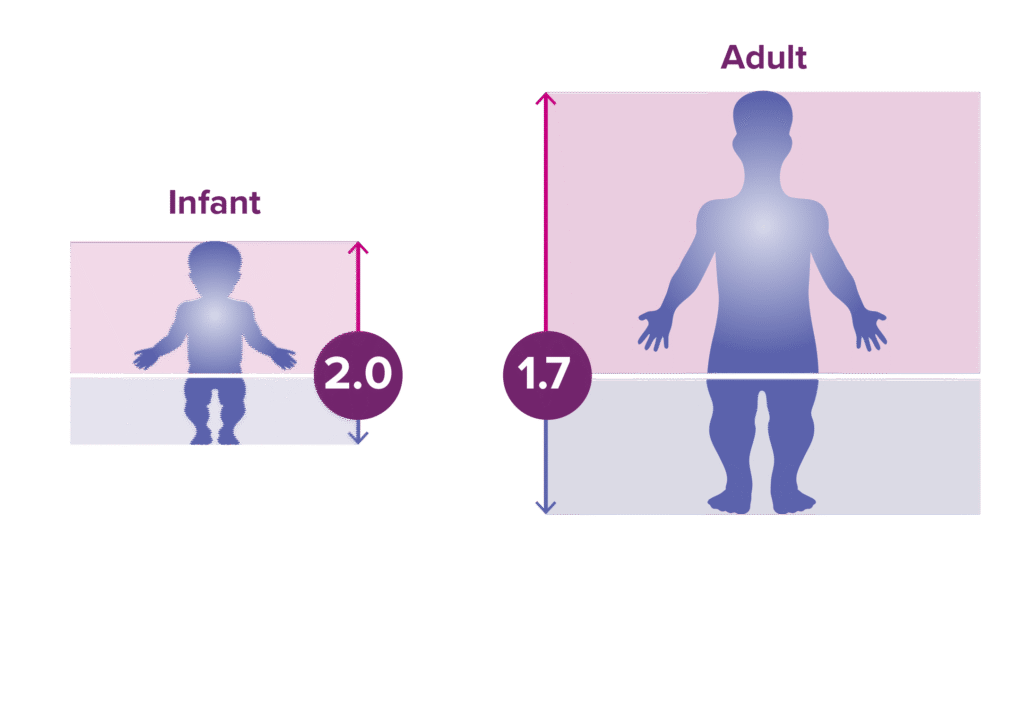
How body proportions change from infancy to adulthood. The first example is an average-stature adult. The second is an adult with achondroplasia.
Average stature
In achondroplasia

Upper vs lower body length ratio remains disproportionate
(higher than 1.0) into adulthood for people with achondroplasia.

Body proportionality was measured in children aged 5 to 15 years treated with VOXZOGO or placebo over 1 year

In a clinical trial, the impact of VOXZOGO on body proportionality was measured after 1 year. Results were measured by the change of upper vs lower body length ratio from baseline (before treatment was started).

For both groups, the ratio decreased from before treatment by a very small amount. After 1 year, the placebo group decreased from 2.01 to 1.98 and the VOXZOGO group decreased from 1.98 to 1.95. The ratio difference from placebo after 1 year of treatment was -0.01 with VOXZOGO.

A lower ratio number means that body disproportionality decreased from before treatment was started. These results show that after 1 year, body proportionality did not worsen for both groups.
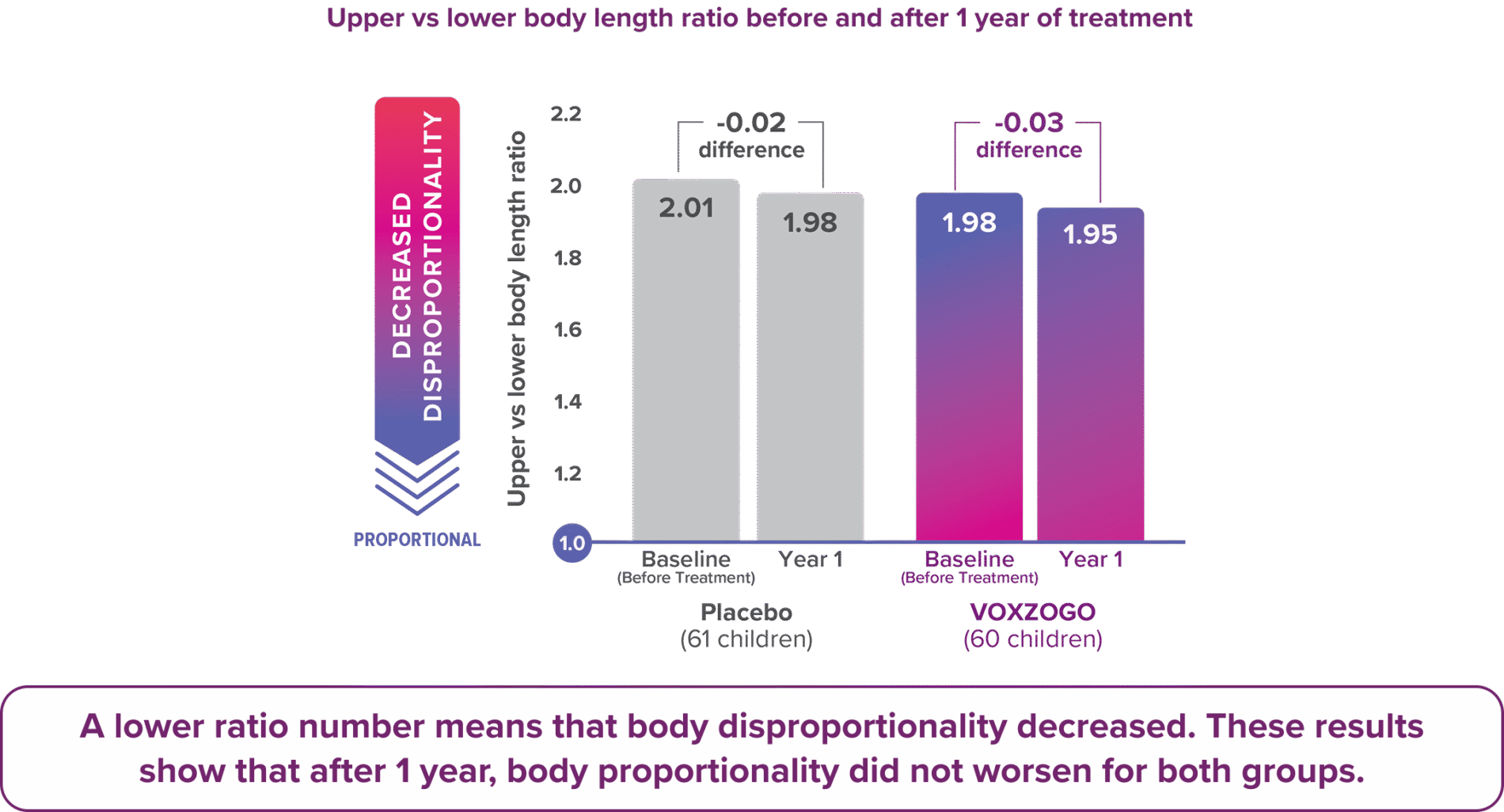
Bar graph showing upper vs lower body ratio after 1 year of treatment.

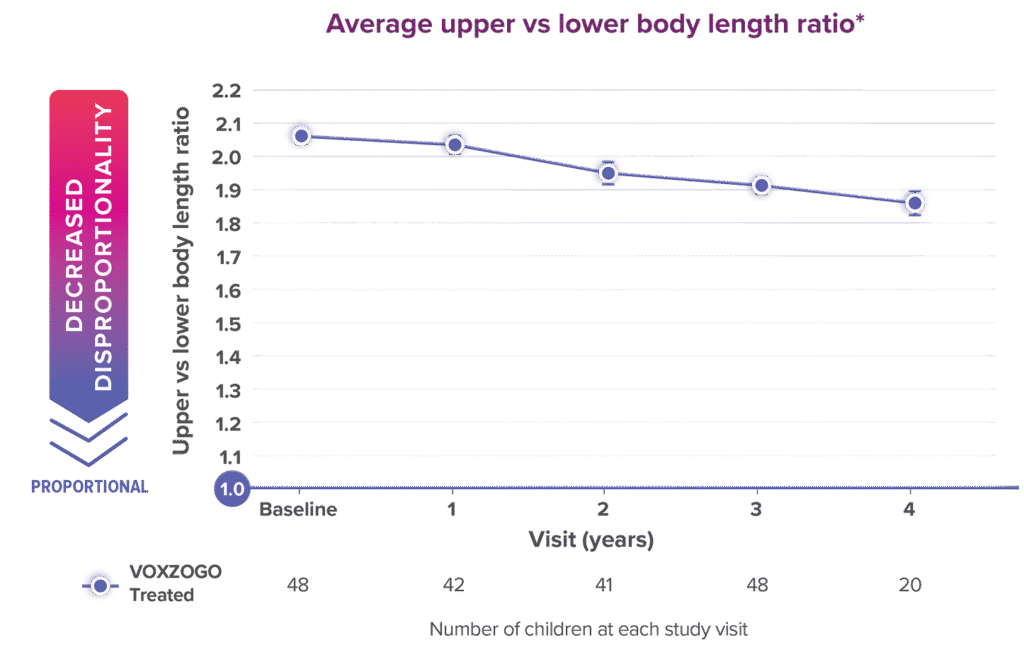
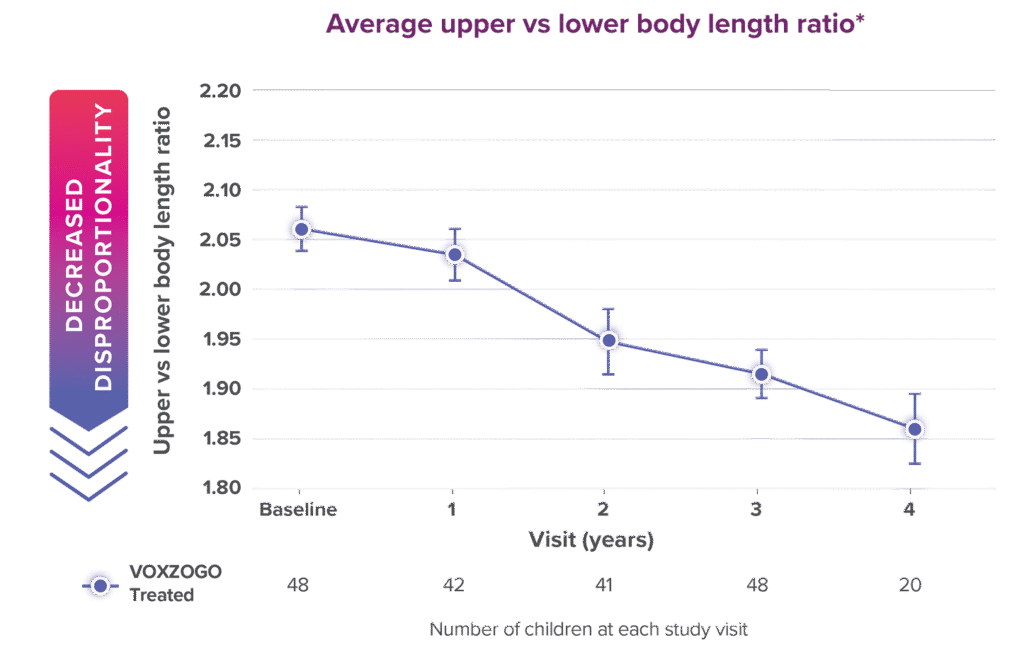
Body proportionality was continually measured in a subset of VOXZOGO-treated children over 4 years

In the long-term follow-up study of the same clinical trial (known as an open-label extension), body proportionality was continually measured in VOXZOGO-treated children over 4 years. The average upper vs lower body length ratio for all children at each study visit is plotted in this graph, starting from baseline and for every yearly study visit until year 4.

Limitations

  • Long-term follow-up study did not have a placebo group, and caregivers, patients, and doctors were aware that all children were given VOXZOGO (thus understanding these results may be limited since there was no untreated group for all 4 years)
  • Study includes a small number of children under 11 and 12 years old (thus results may not be representative for all children under these ages); the results may change as they continue to grow and as more children are followed over time
  • Natural history of untreated children with achondroplasia is also characterized by decreasing ratios over time; it remains to be seen if the ratio decrease in VOXZOGO-treated children is large enough to indicate a treatment’s effect on proportionality
  • These are early results and not final. VOXZOGO’s long-term effects on height and body proportionality are still being studied

Study Design

  • Long-term follow-up study of same clinical trial: All children were taking VOXZOGO for up to 5 years, children taking placebo in the first year of the trial switched to VOXZOGO
  • Subset of VOXZOGO-treated children had their upper vs lower body length ratio measured every year:
    • Age when started VOXZOGO: 5 years or older
    • Average treatment duration: 4 years
    • Girls under 11 years old, boys under 12 years old (ages when body proportionality is known to change in children with achondroplasia)
Line graph showing upper vs lower body ratio after 4 years of treatment.
Overview
Closer look

*Data for visit year 5 included only 1 patient at the time of the study analysis and is not shown.

Sign up to receive information about upcoming speaker events led by experienced doctors and caregivers

* Required fields

IMPORTANT SAFETY INFORMATION

What is the most important safety information about VOXZOGO?

  • VOXZOGO may cause serious side effects including a temporary decrease in blood pressure in some patients. To reduce the risk of a decrease in blood pressure and associated symptoms (dizziness, feeling tired, or nausea), patients should eat a meal and drink 8 to 10 ounces of fluid within 1 hour before receiving VOXZOGO.

What are the most common side effects of VOXZOGO?

  • The most common side effects of VOXZOGO include injection site reactions (including redness, itching, swelling, bruising, rash, hives, and injection site pain), high levels of blood alkaline phosphatase shown in blood tests, vomiting, joint pain, decreased blood pressure, and stomach ache. These are not all the possible side effects of VOXZOGO. Ask your healthcare provider for medical advice about side effects, and about any side effects that bother the patient or that do not go away.

How is VOXZOGO taken?

  • VOXZOGO is taken daily as an injection given under the skin, administered by a caregiver after a healthcare provider determines the caregiver is able to administer VOXZOGO. Do not try to inject VOXZOGO until you have been shown the right way by your healthcare provider. VOXZOGO is supplied with Instructions for Use that describe the steps for preparing, injecting, and disposing VOXZOGO. Caregivers should review the Instructions for Use for guidance and any time they receive a refill of VOXZOGO in case any changes have been made.
  • Inject VOXZOGO 1 time every day, at about the same time each day. If a dose of VOXZOGO is missed, it can be given within 12 hours from the missed dose. After 12 hours, skip the missed dose and administer the next daily dose as usual.
  • The dose of VOXZOGO is based on body weight. Your healthcare provider will adjust the dose based on changes in weight following regular check-ups.
  • Your healthcare provider will monitor the patient’s growth and tell you when to stop taking VOXZOGO if they determine the patient is no longer able to grow. Stop administering VOXZOGO if instructed by your healthcare provider.

What should you tell the doctor before or during taking VOXZOGO?

  • Tell your doctor about all of the patient’s medical conditions including
    • If the patient has heart disease (cardiac or vascular disease), or if the patient is on blood pressure medicine (anti-hypertensive medicine).
    • If the patient has kidney problems or renal impairment.
    • If the patient is pregnant or plans to become pregnant. It is not known if VOXZOGO will harm the unborn baby.
    • If the patient is breastfeeding or plans to breastfeed. It is not known if VOXZOGO passes into breast milk.
  • Tell your doctor about all of the medicines the patient takes, including prescription and over-the-counter medicines, vitamins, and herbal supplements.

You may report side effects to BioMarin at 1-866-906-6100. You are encouraged to report negative side effects of prescription drugs to the FDA. Visit www.fda.gov/medwatch, or call 1-800-FDA-1088.

Please see additional safety information in the full Prescribing Information and Patient Information.

What is VOXZOGO used for?

  • VOXZOGO is a prescription medicine used to increase linear growth in children with achondroplasia and open growth plates (epiphyses).
  • VOXZOGO is approved under accelerated approval based on an improvement in annualized growth velocity. Continued approval may be contingent upon verification and description of clinical benefit in confirmatory trials.