
Bones grow for a limited time. In achondroplasia, the growth of bones that develop from cartilage (called endochondral bones) is inhibited. This can impact physical development, including reduced and disproportionate growth.
See how physical development is tracked for children with achondroplasia.

By 2 years old, children with achondroplasia reach more than half of their adult height*
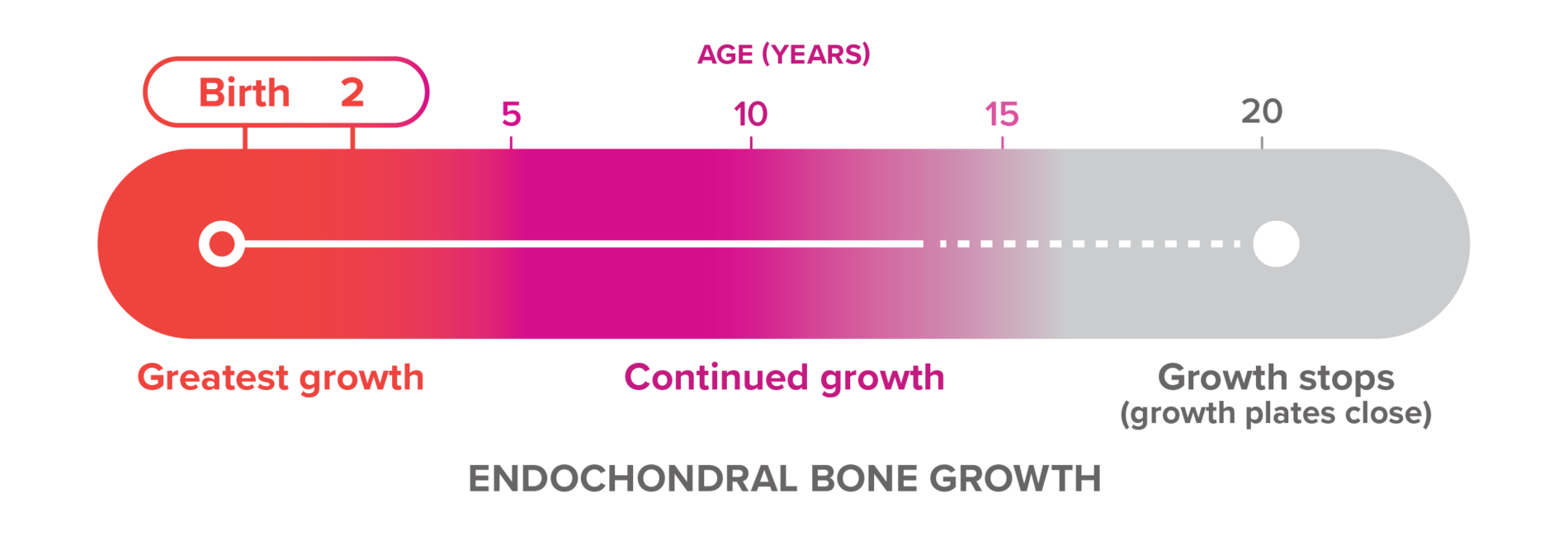

*Based on stature-for-age data (birth to 18 years old) from CLARITY, an achondroplasia natural history study comprising measurements from 549 males and 502 females with achondroplasia.
Endochondral bone growth occurs in areas of the bones called growth plates and requires a balance of two cell signals—FGFR3 (which slows growth) and CNP (which promotes growth). In achondroplasia, the FGFR3 signals are overactive, causing an imbalance that inhibits bone growth.

This graphic is an illustration of the cell signaling imbalance in achondroplasia and is not to scale.
CNP, C-type natriuretic peptide; FGFR3, fibroblast growth factor receptor 3.

Growth charts specific to children with achondroplasia are important when tracking physical development.
DownloadYour local BioMarin representative can help you find answers.
What is the most important safety information about VOXZOGO?
What are the most common side effects of VOXZOGO?
How is VOXZOGO taken?
What should you tell the doctor before or during taking VOXZOGO?
You may report side effects to BioMarin at 1-866-906-6100. You are encouraged to report negative side effects of prescription drugs to the FDA. Visit www.fda.gov/medwatch, or call 1-800-FDA-1088.
Please see additional safety information in the full Prescribing Information and Patient Information.
What is VOXZOGO used for?
 Learn More